THE DEATH
OF SENECA
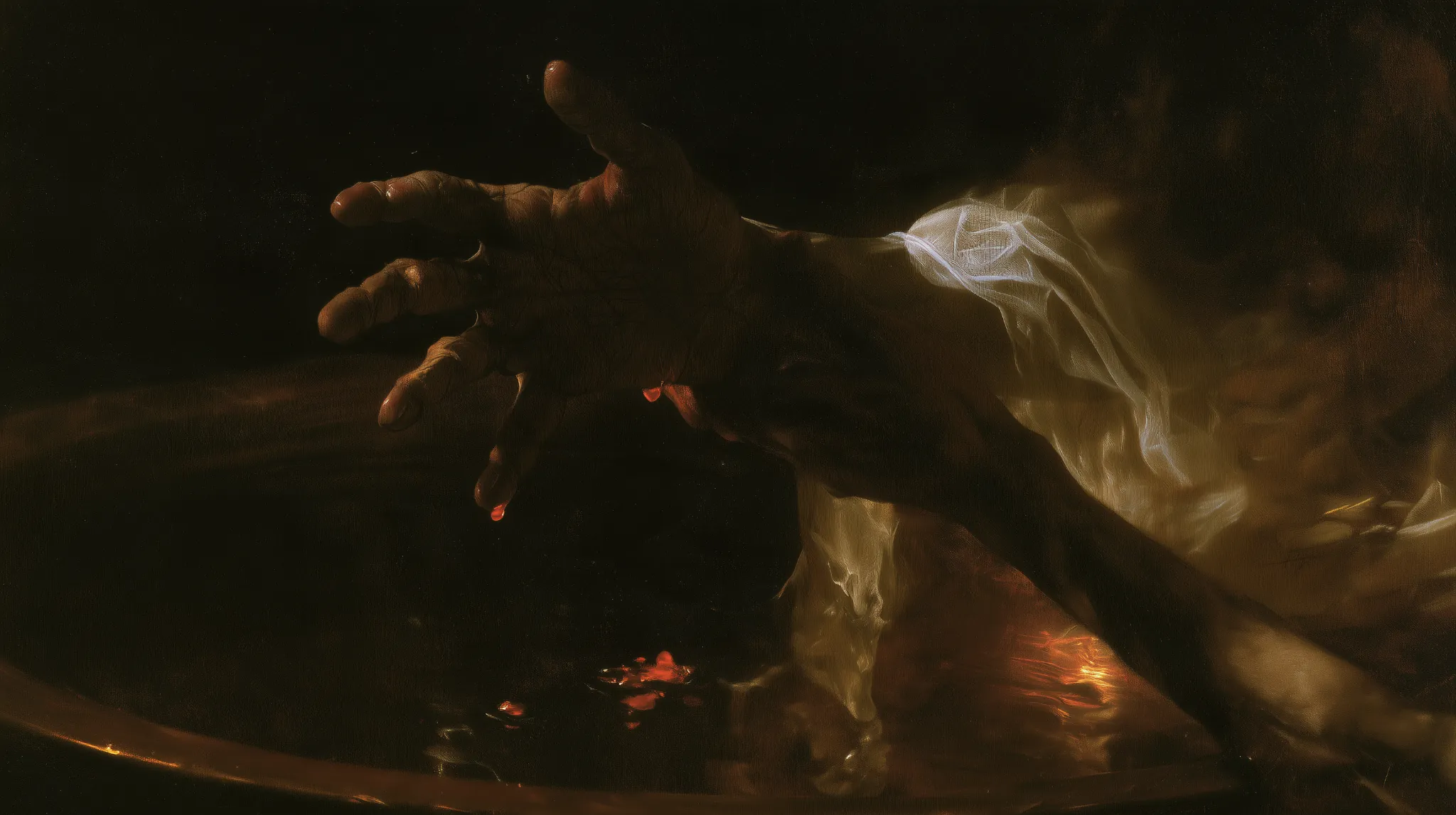
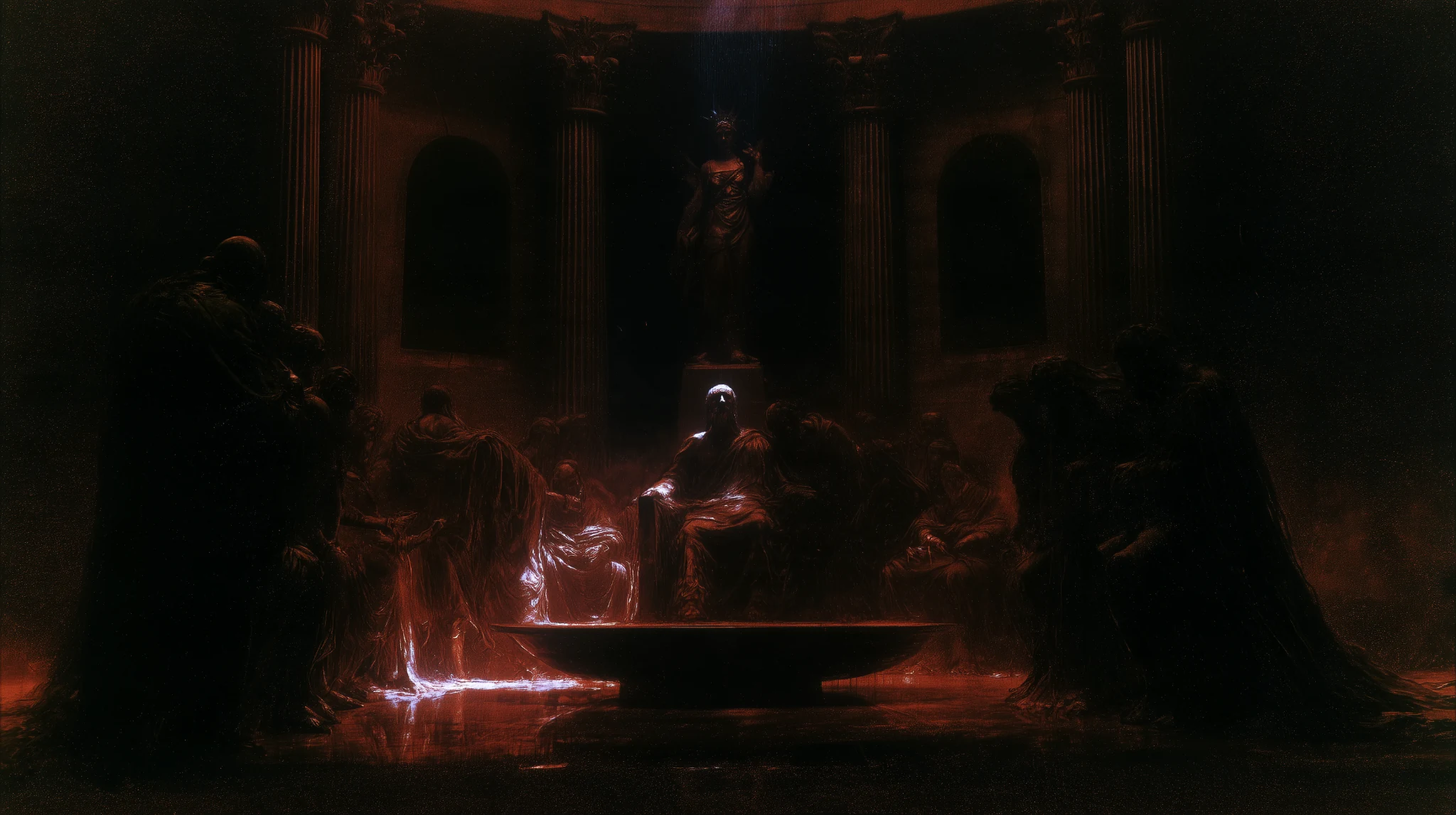
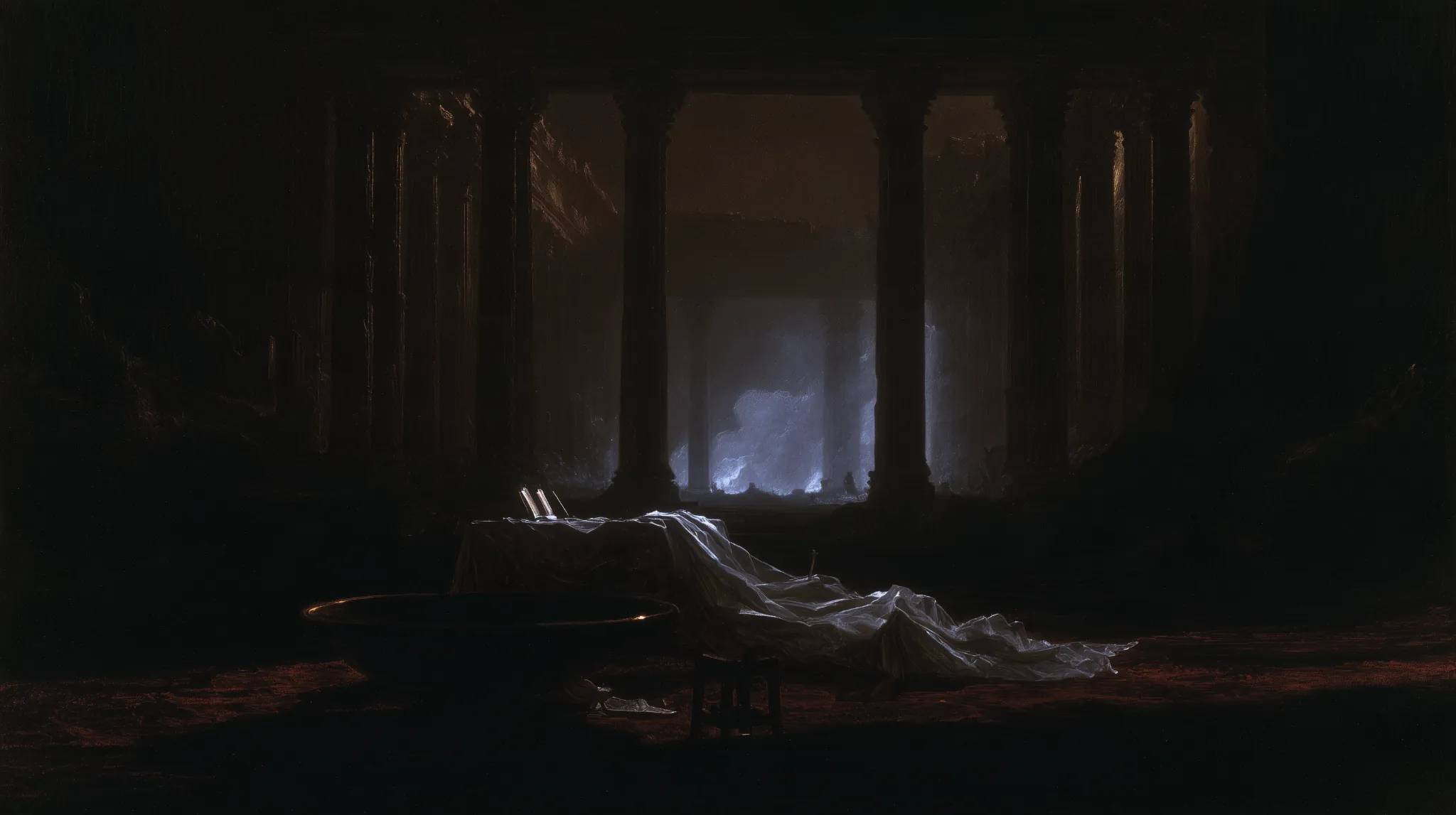
Seven images. From the arrival of the order to the final hours of Seneca, and the room left behind.
ENTER THE SEQUENCERome, AD 65. An imagined visual sequence after Tacitus. The images move from the soldiers' arrival through Seneca's portrait and the vulnerable body to the final hours and, finally, an empty chamber. This is art, not an archaeological reconstruction.
07 IMAGES / 2026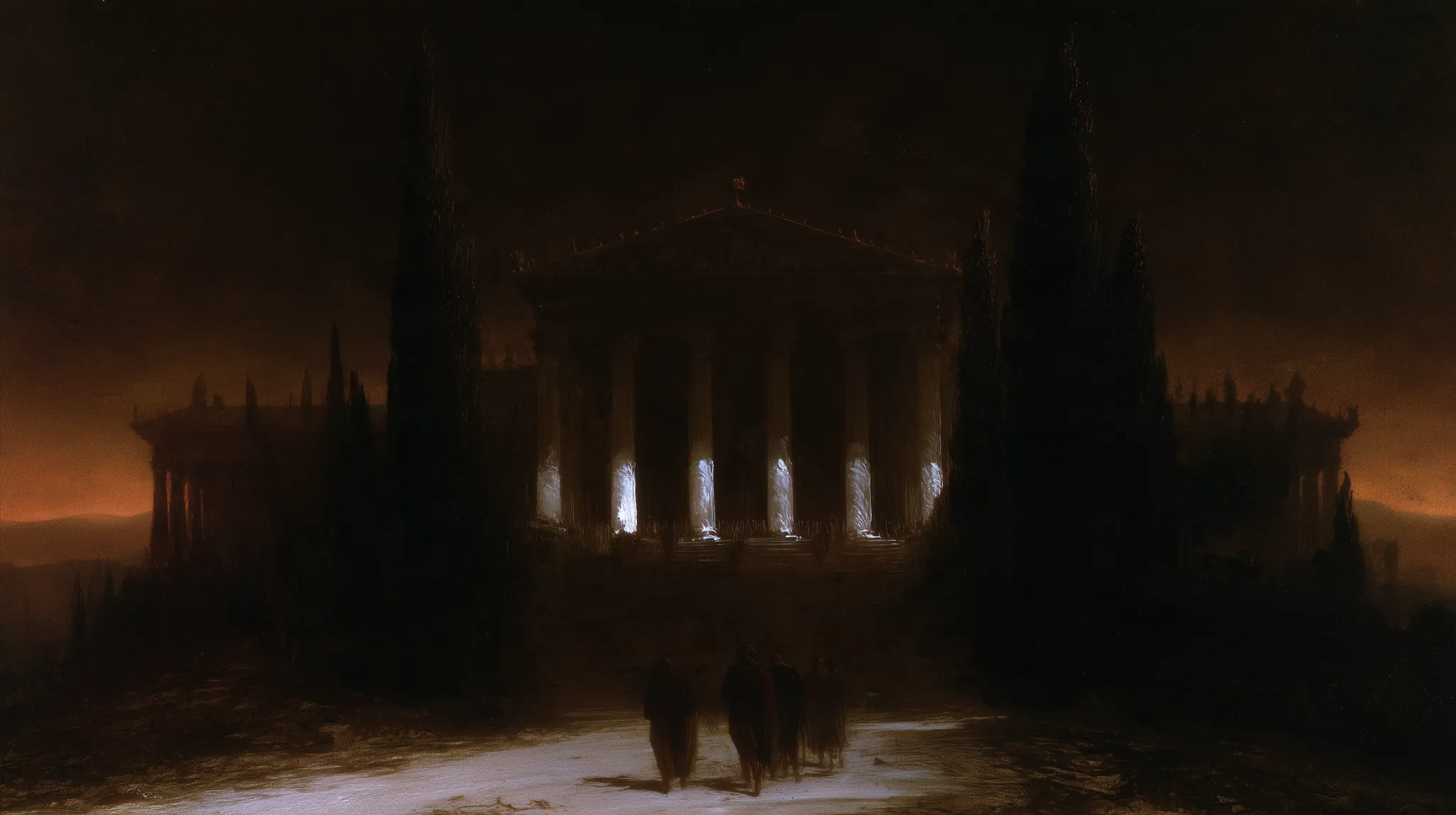
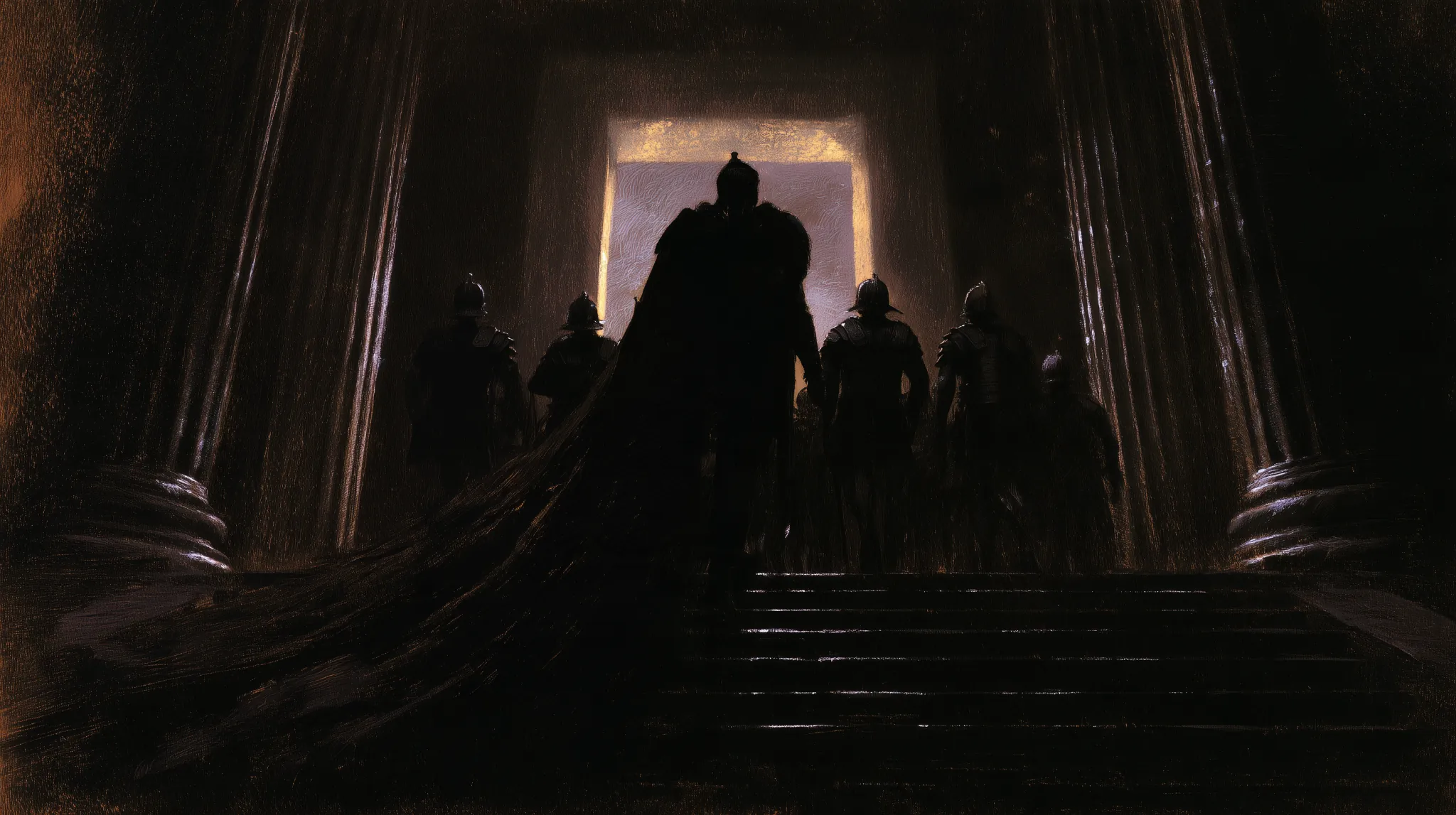
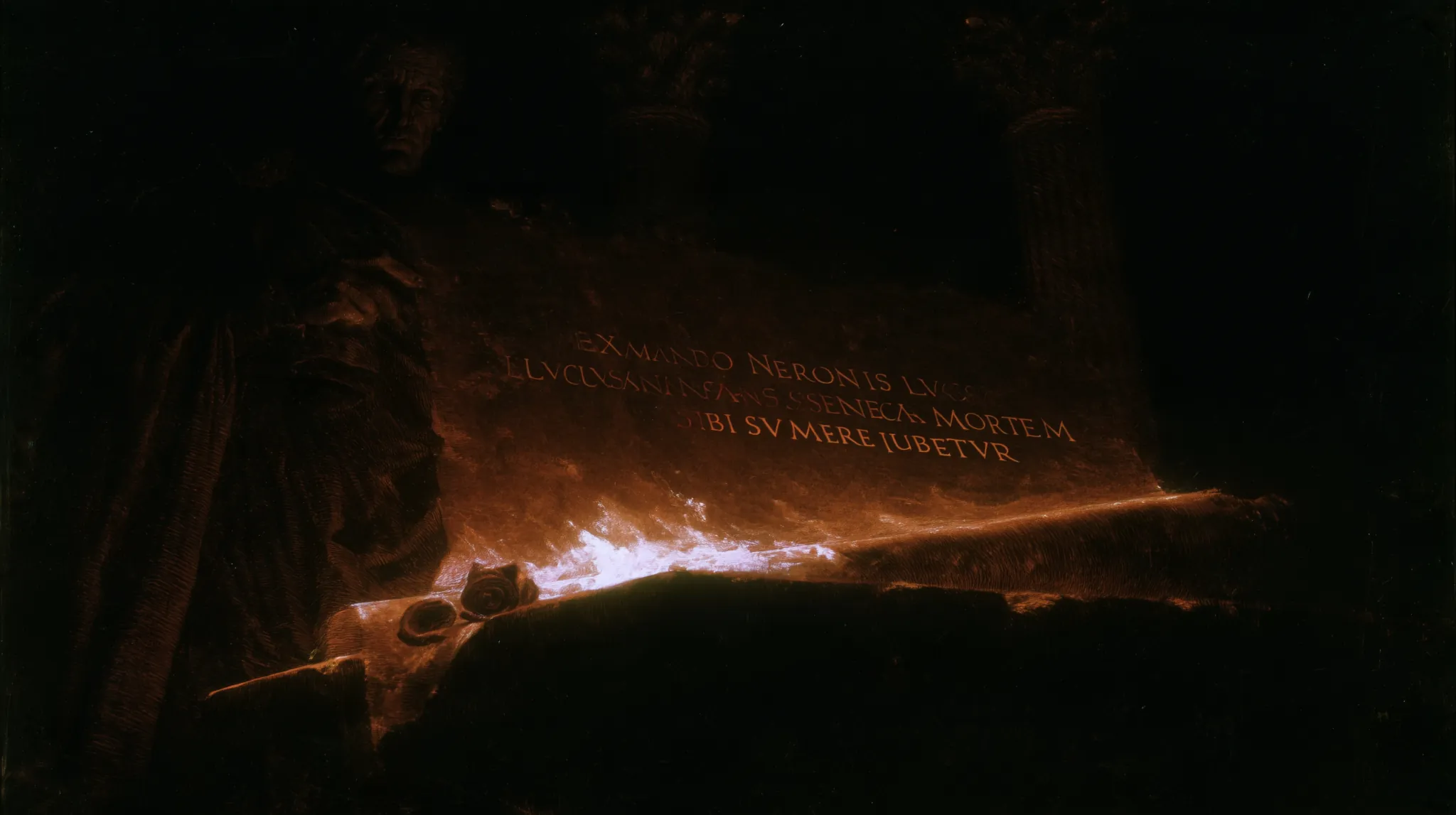
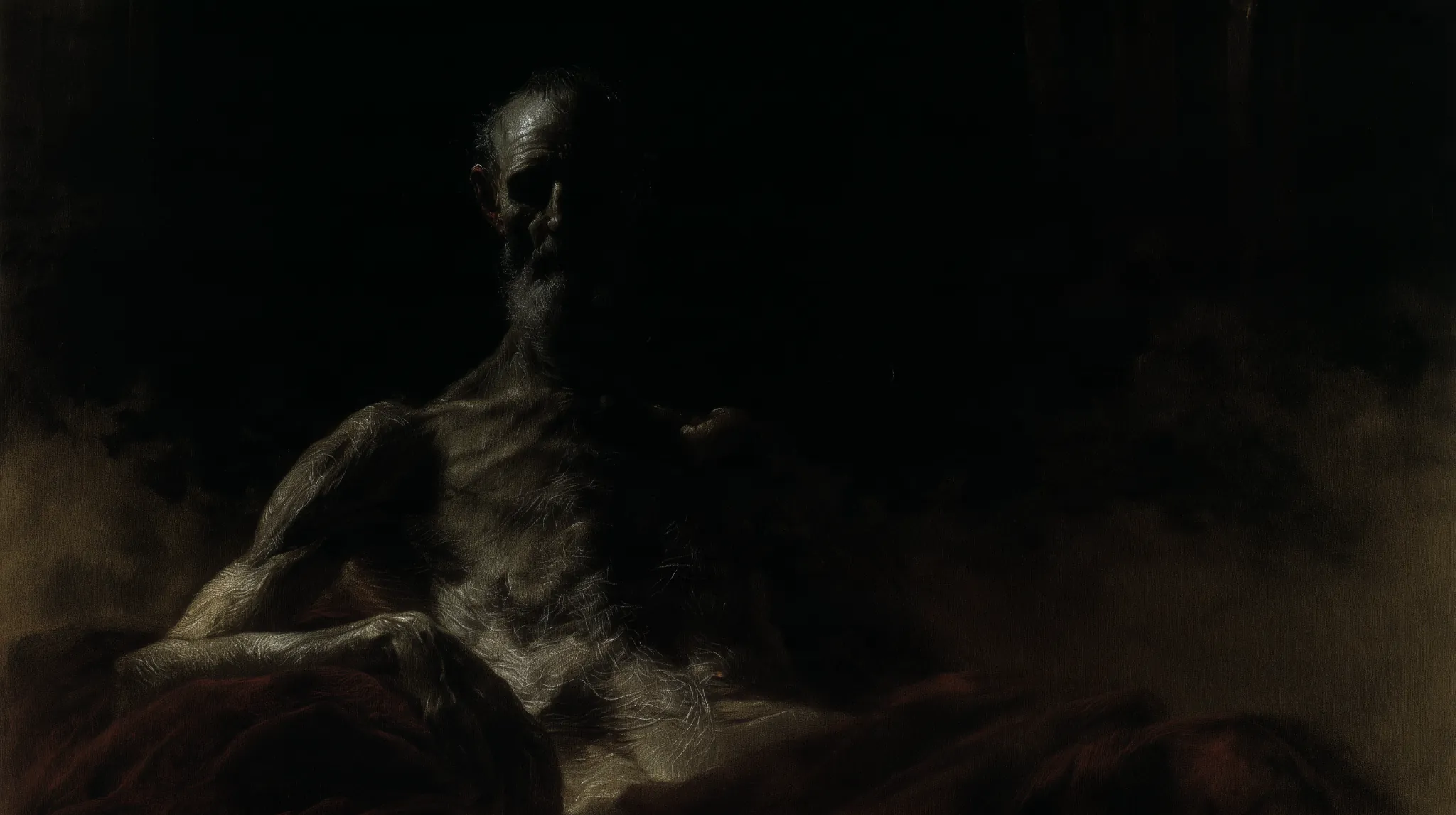
The Latin passages are short extracts from Tacitus' account, not inscriptions reproduced from the paintings. English renderings are editorial translations. The lettering in The Order is invented visual material and should not be read as an authentic Roman document.
Before the images.
Before beginning this series, I read Seneca's philosophical writings and his letters, alongside Tacitus's account of his final hours. I wanted to approach the scene through more than its visible actions: Seneca's reflections on mortality, fear, human agency and composure informed how I imagined the philosopher and those around him.
I worked toward historical and psychological precision wherever the texts permitted it. The faces, the architecture, the gestures and the light remain acts of interpretation. These images attempt to understand an experience that no surviving account can show us directly.
DLORIAN · ARTIST'S NOTEThe will
he could not write.
Imago Vitae is a single-voice reading of selected passages from Seneca's Letter 26, framed by Tacitus' account of the will he was not allowed to write. Its ending leaves the room in silence.
ABOUT THE TEXT & RECORDING
Tacitus records that Seneca asked for tablets to write his will, was refused, and left his friends the image of his life. Those events are summarized in the two opening lines by an editorial narrator, not presented as verbatim speech. The remainder draws on Epistulae morales ad Lucilium 26.1–10. The spoken English passages are new editorial translations, sometimes abridged; the Latin selections are quoted from the original.
This is not Seneca's last letter, a surviving will or a recording of his last words. No such written will is preserved. One synthetic rehearsal voice performs both the short introduction and the letter. The original instrumental score can be played independently. The voice is a draft for a future human or high-quality recorded performance.
The closing discussion of freedom in §10 follows Seneca's reflection on an Epicurean saying introduced in §8, rather than being presented as Seneca's original formulation.
READ SELECTED LETTER / 23 PASSAGES
- Loading the source-aligned transcript…
How a death
acquires a face.
Artists have returned to Seneca's death for four centuries, but they have never agreed on its visual meaning. Rubens placed the body at its centre. The Utrecht painters drew the event into deep shadow; Giordano focused on gestures around a dying philosopher; David made it theatrical; Domínguez Sánchez brought the scene into the nineteenth-century historical imagination.
These are not illustrations of facts that a witness photographed. They are interpretations of Tacitus and of earlier images. Rubens even modelled his Seneca on an ancient statue later identified as a fisherman. This archive shows how an image of one man's death is repeatedly invented, and why this DLORIAN sequence chooses distance, objects and the empty room instead.


An expansive Dutch studio interpretation, with mourners around the philosopher. Workshop attribution.

A Flemish Baroque version emphasizing bodies and gestures; attribution recorded by art catalogues.

Seneca surrounded by listeners and attendants, the violence absorbed into a dark chamber.


A nineteenth-century historical interior that stages grief around a marble bath.
The statue that informed Rubens' work, long called the dying Seneca, is now known as an Old Fisherman. A famous image of the philosopher was partly built on a mistaken identity. Nationalmuseum research ↗ · Louvre sculpture ↗
The surviving
pages.
Nothing that Tacitus personally wrote about these events survives in his handwriting. His account reached us through medieval manuscripts and early printed editions. These are genuine documentary objects, not decorative reconstructions of ancient scrolls.
The first image below comes from a manuscript of the Annals copied in the eleventh century. It shows the end of Book XI and the beginning of Book XII, not the pages describing Seneca's death in Book XV. The second image shows the opening of the first printed edition of Books XI–XVI in Venice, c. 1471–1472.


The surviving manuscript and the Renaissance print preserve a story set in AD 65. They do not show us Seneca's face or his room. That absence is where the artist's interpretation begins.
A death
recorded later.
In AD 65, Nero ordered Seneca's death. Tacitus describes the soldiers reaching his villa near evening, Seneca addressing his friends, Pompeia Paulina's decision to die with him, the slow loss of blood and the final attempt to hasten death through poison and heat.
Tacitus wrote decades after these events. What survives is an account, not an eyewitness image. The Roman buildings, faces, gestures and rooms in this series are deliberately invented.
READ PASSAGES FROM TACITUS / LATIN + ENGLISH +
Near evening, the tribune arrived.
To leave behind an image of his life.
Where are the teachings of wisdom, where the reason rehearsed over so many years against what lies ahead?
She, however, insisted that death was appointed for her too.
I had shown you the consolations of life; you prefer the honour of death.
Then carried into the bath, he died from its steam.
Short excerpts from the surviving Latin text; English renderings for this exhibition. Tacitus reports events after the fact, rather than recording the conversation verbatim. Chapter labels follow the cited Latin Library edition.